
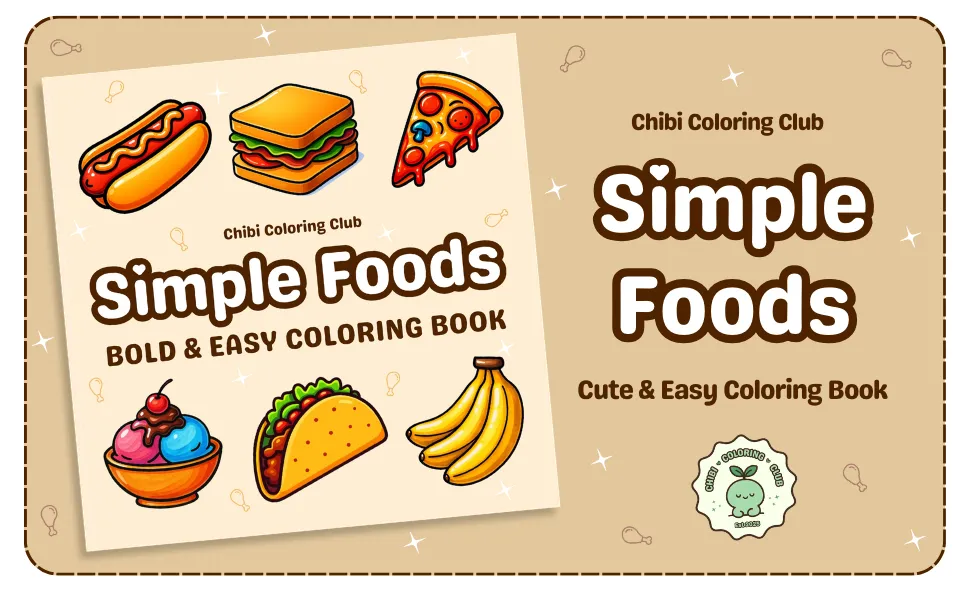
When you’re just starting out with coloring, the type of coloring pages you choose can either make the experience enjoyable and rewarding, or frustrating and discouraging.
Most beginners assume that all coloring pages are the same, and that improvement simply comes from practice. While practice is important, the reality is that your starting point matters just as much. If you begin with pages that are too detailed or poorly designed, you’ll struggle with control, feel overwhelmed, and often lose motivation before you’ve had a chance to improve.
On the other hand, when you choose the right kind of coloring pages, everything changes. Your lines become cleaner, your colors look more even, and you start to build confidence almost immediately.
Understanding what makes a coloring page “beginner-friendly” is therefore one of the most important steps in your coloring journey.
Why Simplicity Is More Powerful Than Detail
One of the biggest mistakes beginners make is choosing highly detailed or complex designs because they look impressive. There’s a natural assumption that more detail means better results, but in practice, the opposite is often true.
Detailed coloring pages require a level of control that most beginners haven’t developed yet. Small spaces demand precision, and intricate patterns leave very little room for error. This often leads to uneven coloring, going outside the lines, and a finished result that feels messy rather than satisfying.
Simpler pages, however, give you space — both physically and mentally. Larger areas allow your hand to move more freely, which helps you develop smooth, even coloring. At the same time, fewer details mean you can focus on the fundamentals: pressure control, consistency, and color choice.
This is why simplicity isn’t a limitation at the beginning — it’s actually an advantage.
The Role of Line Quality and Structure
Another factor that beginners often overlook is the quality of the lines in a coloring page.
Strong, clear outlines act as a guide. They give your coloring structure and make it easier to stay within boundaries. When lines are too thin or faint, it becomes much harder to control your coloring, especially if you’re still developing hand coordination.
Well-designed coloring pages also have a natural flow. The shapes make sense, the sections are balanced, and the overall design feels intentional. This structure helps you understand where colors should go and how different parts of the image relate to each other.
Poorly designed pages, on the other hand, can feel confusing. You might find yourself unsure of what to color, where to start, or how to keep things consistent. That uncertainty often leads to hesitation, which slows down your progress.
Choosing Designs That Support Learning
At the beginning, your goal is not to create perfect artwork — it’s to build skill.
The best coloring pages for beginners are the ones that support that goal. They give you enough challenge to learn something new, but not so much that you feel overwhelmed.
For example, simple animal illustrations are often a great starting point. They have recognizable shapes, natural color associations, and enough variation to keep things interesting. At the same time, they don’t require advanced techniques to look good.
Basic nature scenes can also be helpful. Elements like leaves, clouds, and flowers allow you to experiment with color while still following familiar patterns. This reduces the mental effort required to choose colors and lets you focus more on technique.
Even simple objects can be surprisingly effective for practice. They may not seem exciting at first, but they help you develop control and consistency — two skills that are essential for everything you do later.
Finding the Right Level for Your Current Skill
A common challenge for beginners is knowing whether a coloring page is too easy or too difficult.
If a page feels overwhelming before you even start, that’s usually a sign that it’s too advanced for your current level. You might notice very small spaces, highly repetitive patterns, or a level of detail that requires careful precision. Starting with these types of pages often leads to frustration rather than improvement.
On the other hand, if a page feels almost too simple, that’s not necessarily a bad thing. Simpler designs give you the opportunity to refine your technique without pressure. They allow you to focus on smoothness, neatness, and consistency — all of which are more important than complexity at the beginning.
The key is to gradually increase difficulty. As your control improves, you can start exploring more detailed designs. This progression helps you build skill in a way that feels natural, rather than forced.
The Connection Between Your Tools and Your Pages
Your choice of coloring pages should also match the tools you’re using.
For example, if you’re working with markers, larger spaces are much easier to handle. Markers cover areas quickly, but they can be difficult to control in very small sections. Using them on highly detailed pages often leads to bleeding and uneven edges.
Colored pencils, on the other hand, give you more control and are better suited for slightly more detailed designs. They allow you to work slowly, build up color gradually, and handle smaller areas with greater precision.
Understanding this relationship helps you avoid unnecessary frustration. Instead of forcing your tools to work on unsuitable designs, you align your materials with the type of page you’re using.
What to Avoid as a Beginner
While it’s tempting to try more advanced designs early on, there are certain types of coloring pages that are best avoided until you have more experience.
Highly detailed mandalas, for example, often look appealing but can be overwhelming due to their repetitive and intricate patterns. Realistic portraits are another challenge, as they require careful shading and color blending to look convincing.
Grayscale coloring pages, which include pre-shaded areas, also demand a level of understanding that beginners usually haven’t developed yet. These types of pages are better suited for later stages, once you’re comfortable with basic techniques.
Avoiding these early on doesn’t limit your progress — it actually supports it by allowing you to build a strong foundation first.
How the Right Pages Accelerate Your Progress
When you consistently use beginner-friendly coloring pages, you start to notice improvement much faster.
Your hand becomes steadier, your coloring becomes smoother, and your confidence grows with each page you complete. This creates a positive cycle: the more you enjoy the process, the more you practice, and the more you improve.
Over time, you’ll naturally start exploring more complex designs, not because you feel pressured to, but because you feel ready.
That’s the point where your skills begin to expand in a meaningful way.
Final Thoughts
The best coloring pages for beginners are not the most detailed or visually impressive ones. They are the ones that help you build skill, develop confidence, and enjoy the process from the very beginning.
Starting simple is not a sign of limitation — it’s a smart and intentional choice that sets you up for long-term improvement.
As you continue your coloring journey, the pages you choose will evolve along with your skills. But in the beginning, the right choice is always the one that makes learning feel natural and enjoyable.
 No products in the cart.