
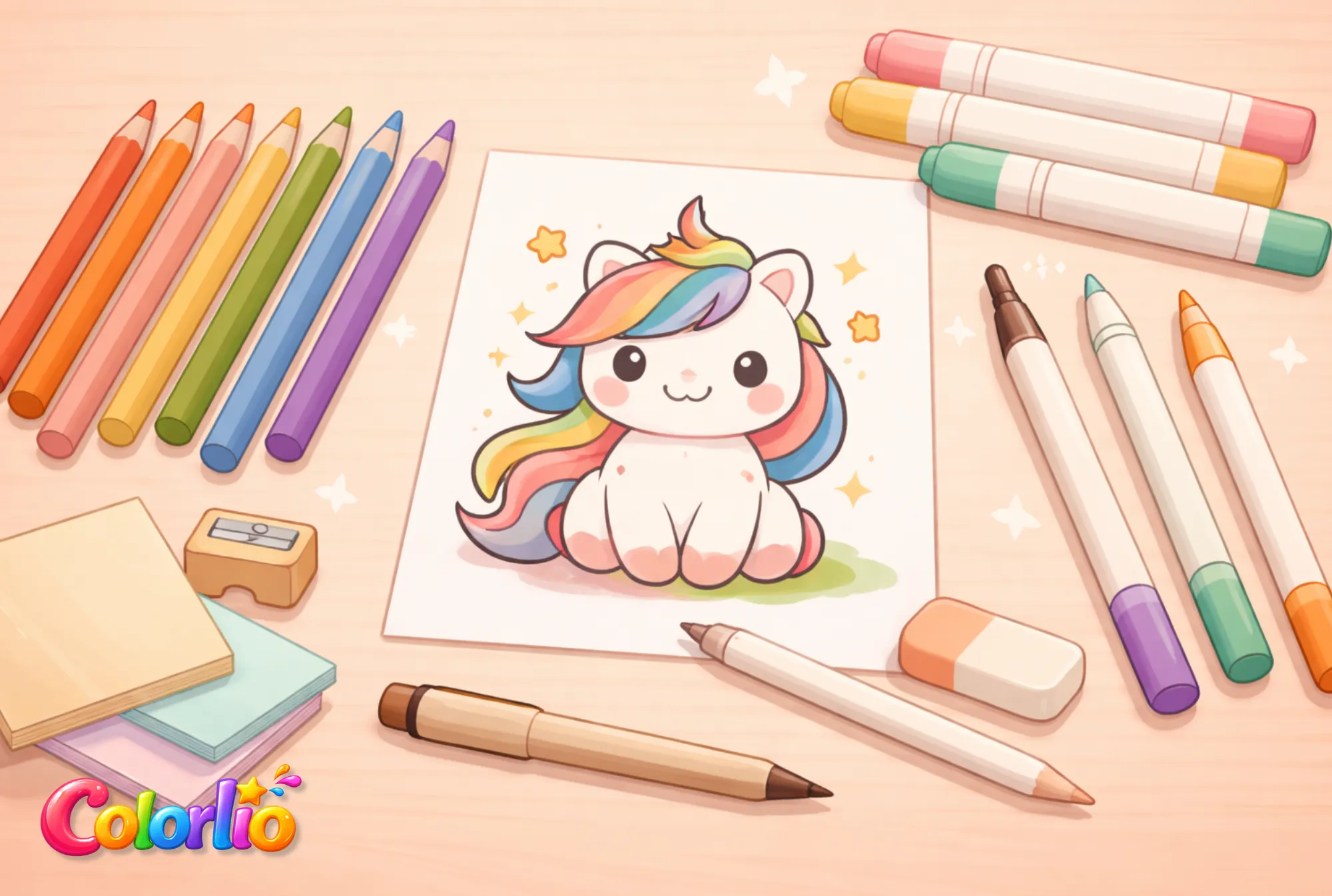
When you’re starting out with coloring, it’s easy to think that you need a huge collection of expensive supplies to get good results. That’s one of the biggest misconceptions beginners have.
In reality, the right tools don’t have to be expensive — but they do have to be appropriate for your level and your goals.
Using the right tools from the beginning makes coloring easier, more enjoyable, and far less frustrating. It helps you develop proper technique, avoid common mistakes, and actually enjoy the process instead of struggling through it.
This guide will walk you through the 10 essential coloring tools every beginner should have, explaining not just what they are, but why they matter and how to use them effectively.
Why Your Tools Matter More Than You Think
Before we get into the list, it’s important to understand this:
Your tools don’t make you talented — but they can make learning either smooth or frustrating.
For example:
- The wrong paper can cause bleeding and ruin your work
- Low-quality pencils can feel scratchy and hard to blend
- The wrong eraser can damage your page instead of fixing mistakes
When you use beginner-friendly tools, everything becomes easier:
- Your colors go down smoother
- You have better control
- You get better results faster
That’s why starting with the right essentials is so important.
1. Colored Pencils (Your #1 Beginner Tool)
If you only buy one tool, make it colored pencils.
They are the most beginner-friendly option because they give you full control over pressure, layering, and blending. You can work slowly, fix mistakes more easily, and build confidence without feeling overwhelmed.
Colored pencils are perfect for:
- Smooth shading
- Gradual color buildup
- Practicing control
As a beginner, you don’t need the most expensive set. A good mid-range set with a decent range of colors is more than enough to get started.
2. Quality Coloring Pages (Digital or Printed)
Your results depend heavily on what you’re coloring.
Low-quality images with thin or pixelated lines make coloring harder and less enjoyable. Clear, well-designed coloring pages give you defined spaces and make your work look cleaner.
You can:
- Download digital coloring pages
- Print them at home
- Choose designs that match your skill level
Starting with beginner-friendly pages makes a huge difference in your early progress.
3. The Right Paper (Often Overlooked)
Paper is one of the most underrated tools in coloring.
If your paper is too thin:
- Markers will bleed through
- Pencil layering becomes difficult
- The page may tear or wrinkle
Slightly thicker, smooth paper works best for most beginners. It supports layering and gives you a better overall coloring experience.
If you’re printing your pages, upgrading your paper is one of the easiest ways to improve your results instantly.
4. A Good Eraser (For Clean Corrections)
Mistakes are part of the process, especially when you’re learning.
A good eraser allows you to:
- Lighten pencil marks
- Fix small errors
- Clean up edges
Avoid hard erasers that damage the paper. A softer eraser will lift color gently without tearing or leaving marks.
Even though it seems like a small tool, it plays a big role in keeping your work neat.
5. Sharpener (For Precision and Control)
A sharp pencil gives you better control, especially when working on details or staying inside the lines.
A good sharpener helps you:
- Maintain fine points
- Avoid breaking pencil tips
- Keep your coloring clean and precise
Blunt pencils can make your work look messy and uneven, so keeping them sharp is essential.
6. Markers (For Bold and Vibrant Coloring)
While colored pencils are best for beginners, markers are a great addition once you’re comfortable.
They offer:
- Strong, vibrant colors
- Smooth application
- Faster coverage
However, they require more control and the right paper to avoid bleeding. Starting with a small set is a good way to experiment without feeling overwhelmed.
7. Gel Pens (For Details and Highlights)
Gel pens are perfect for adding small details that make your coloring stand out.
You can use them to:
- Add highlights
- Decorate small areas
- Create contrast
White gel pens, in particular, are excellent for adding finishing touches that bring your artwork to life.
8. Blending Tools (Optional but Powerful)
As you progress, blending becomes an important skill.
Blending tools help you:
- Smooth out color transitions
- Create softer gradients
- Reduce visible pencil strokes
You can blend using:
- Blender pencils
- Tissue or cotton
- Even light layering techniques
While not essential on day one, they become very useful as you improve.
9. A Flat Surface or Desk Setup
Your environment affects your results more than you might expect.
Coloring on an uneven or uncomfortable surface can lead to:
- Poor control
- Hand fatigue
- Messy coloring
A stable, well-lit workspace helps you stay focused and improves your overall experience.
10. Storage for Your Tools
As you start collecting tools, keeping them organized becomes important.
Good storage helps you:
- Find colors quickly
- Keep your tools in good condition
- Stay focused without distractions
This doesn’t need to be anything fancy — even a simple pencil case or box works perfectly.
Do You Need Expensive Tools to Get Good?
This is a common question, and the answer is no.
Expensive tools can enhance your experience, but they are not necessary to become good at coloring. Many beginners improve significantly using basic, affordable supplies.
What matters most is:
- How you use your tools
- How often you practice
- Your understanding of basic techniques
You can always upgrade later as your skills grow.
Building Your Setup the Smart Way
Instead of buying everything at once, start simple:
- Colored pencils
- Good paper or printed pages
- Eraser and sharpener
Then gradually add:
- Markers
- Gel pens
- Blending tools
This approach saves money and prevents overwhelm.
Final Thoughts
Getting started with coloring doesn’t require a huge investment — it requires the right foundation.
With just a few essential tools, you can:
- Improve faster
- Enjoy the process more
- Create cleaner, more polished work
Focus on learning how to use your tools rather than constantly buying new ones.
Because at the end of the day, it’s not about how many tools you have — it’s about how well you use them.